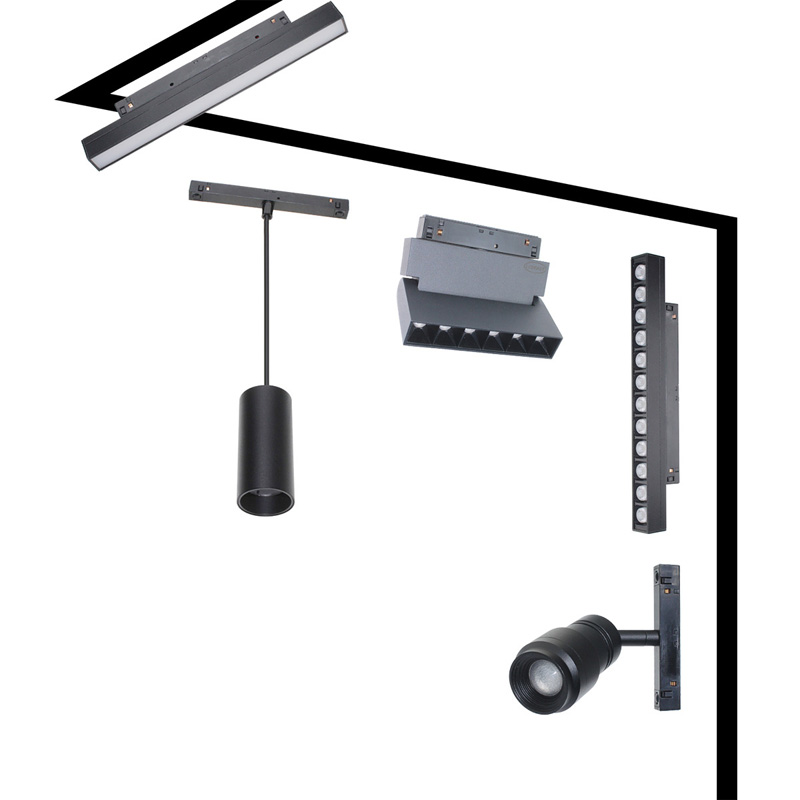
When planning a commercial lighting project, have you ever wondered why two magnetic track lighting systems with similar-looking fixtures can have very different total costs?
The answer often lies in the accessories, power supply configuration, and installation requirements.
A complete magnetic track lighting system is more than just LED fixtures and track rails. Understanding each component before purchasing can help you avoid unnecessary expenses and ensure reliable lighting performance.
1. Choose the Right Magnetic Track Rail
Start by determining the installation method. Magnetic track systems are commonly available in recessed, surface-mounted, and suspended configurations.
Recessed tracks create a clean, minimalist ceiling appearance, while surface-mounted tracks are suitable for existing ceilings. Suspended systems work particularly well in spaces with high ceilings, such as galleries, showrooms, and commercial interiors.
Always confirm the track dimensions, electrical specifications, and compatibility with your selected fixtures.
2. Understand the Essential Accessories
A typical magnetic track lighting project may require:
- Track Rails: The main structure supporting the lighting fixtures.
- Power Supply: Converts the input voltage to the required operating voltage for the system.
- Connectors: Straight, L-shaped, T-shaped, and flexible connectors help create different track layouts.
- End Caps: Provide a clean and finished appearance.
- LED Fixtures: Magnetic spotlights, linear lights, floodlights, and wall washers serve different lighting purposes.
Choosing compatible components is essential for system safety and performance.
3. How to Calculate Your Lighting Budget
Instead of comparing fixture prices alone, calculate the total project cost.
Consider the following:
- Track rail length and quantity.
- Number and wattage of LED fixtures.
- Power supply capacity and quantity.
- Connectors and installation accessories.
- Dimming and lighting control requirements.
- Installation labor and transportation costs.
For example, a museum may need adjustable LED spotlights for artwork, while a fashion showroom may require a combination of spotlights and linear lights for balanced illumination.
The fixture selection, beam angles, color temperature, and CRI should all be considered when preparing the budget.
4. Don’t Overlook Dimming and Customization
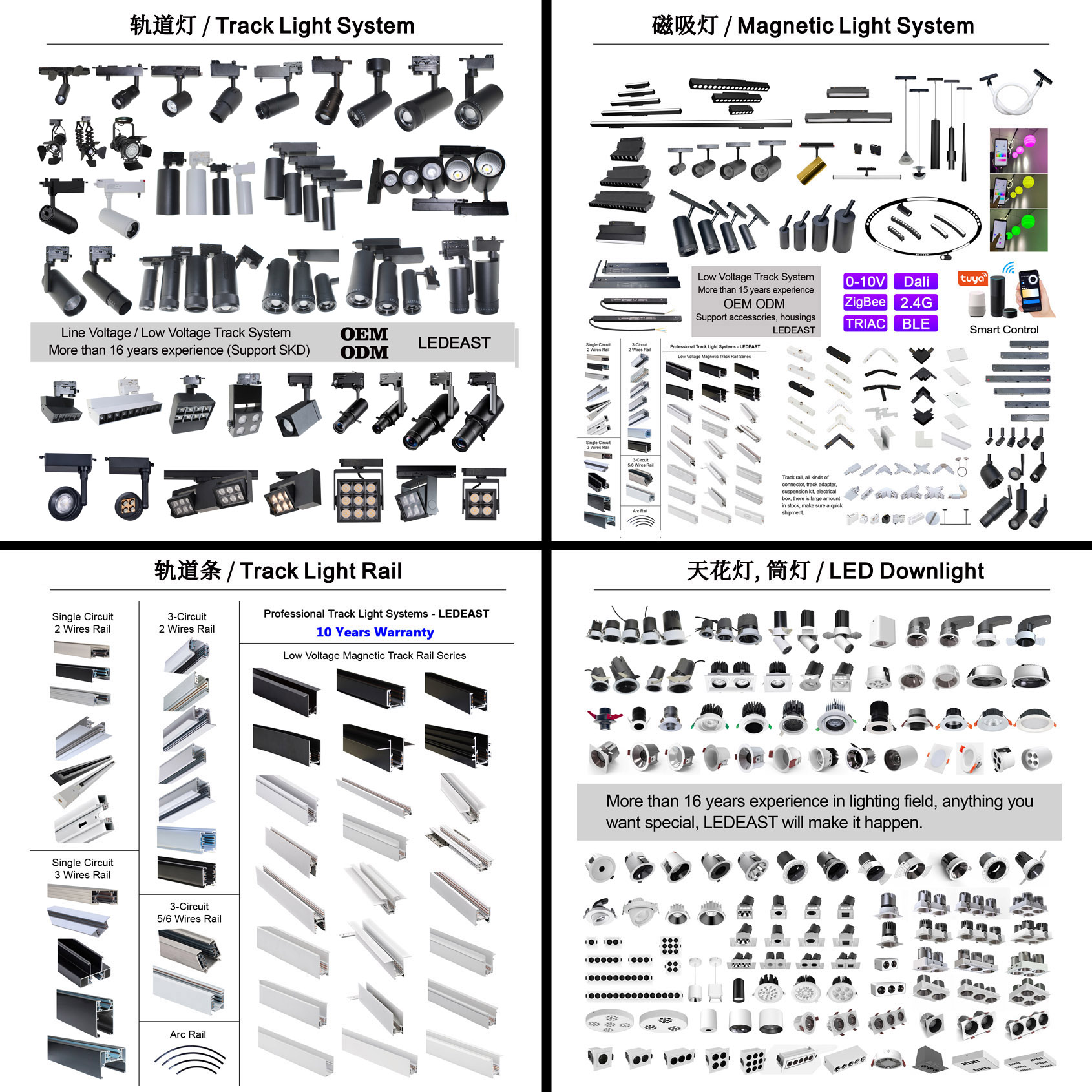
Modern magnetic track lighting systems can support different lighting control solutions depending on the product configuration. DALI, 0-10V, TRIAC, Zigbee, and other smart control options may be considered when compatible drivers and controls are selected.
For commercial projects, choosing the right control system from the beginning can reduce future modification costs.
5. Work with an Experienced Lighting Manufacturer
A reliable supplier should provide more than individual lighting products. Technical support, component compatibility, customization, and consistent quality are equally important.
At LEDEAST, we provide professional LED lighting solutions and OEM & ODM services for different commercial and architectural lighting applications.
Whether your project involves museums, art galleries, shopping malls, retail stores, offices, or furniture showrooms, proper product selection and system planning can make a significant difference.
Planning a magnetic track lighting project? Contact LEDEAST to discuss your lighting requirements and get a suitable product solution.
Post time: Nov-10-2026


